Heating Repair · Madison, TN 37115
Heating Repair in Madison, TN
Heating repair starts with a simple question most callers cannot answer, and should not have to: which system is actually failing? Madison homes heat with gas furnaces, electric heat pumps, air handlers with heat strips, and hybrids of all three. We identify the equipment, read its fault codes, and triage from there, instead of quoting furnace parts for a heat pump problem.
Written quote before work starts · Davidson County homes · Mon-Fri 7AM-7PM · Sat 8AM-4PM · 24/7 Emergency
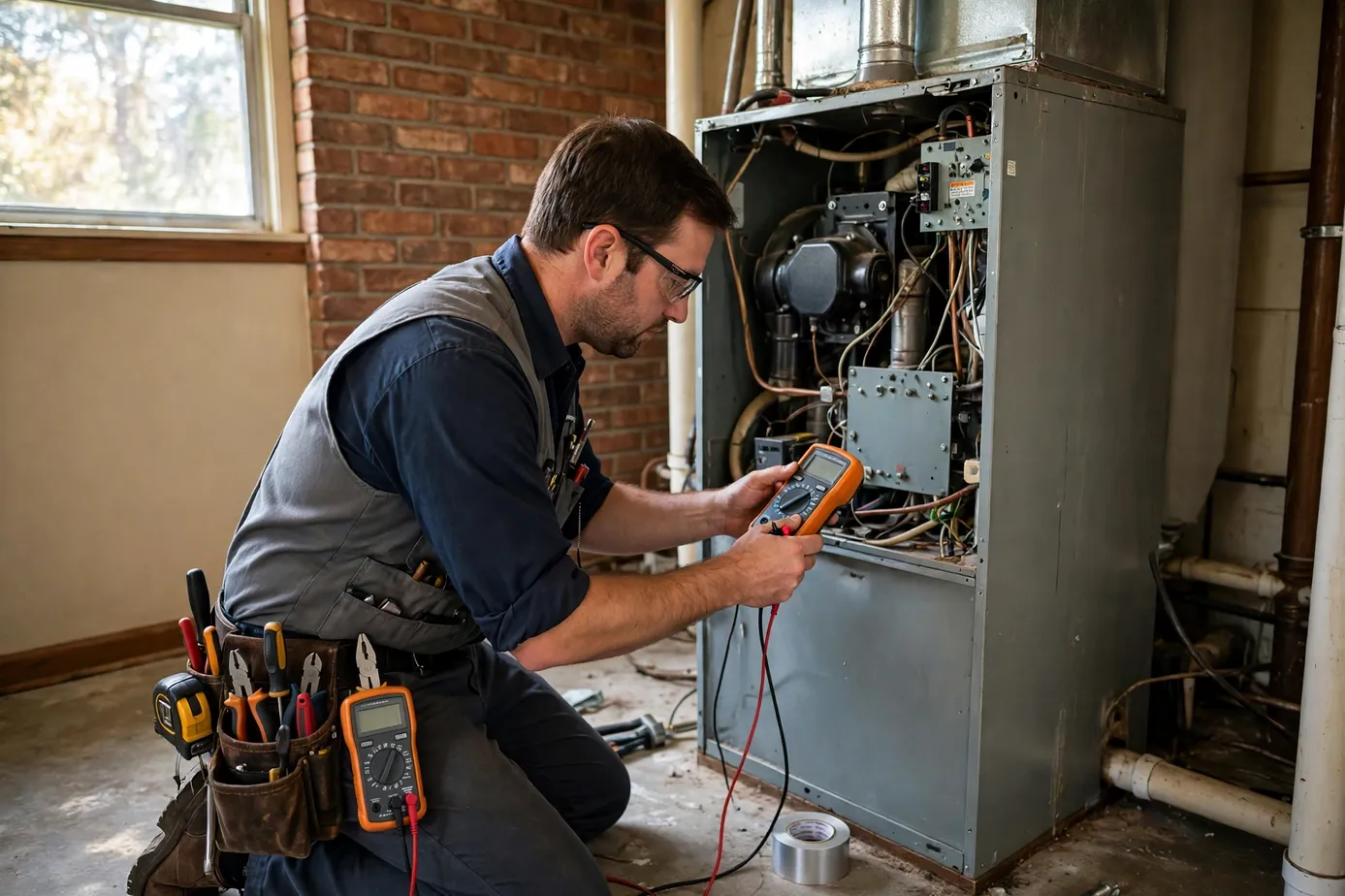
Signs you need heating repair
- No heat at all when the thermostat calls for it
- Air from the vents feels cool or barely warm
- The system runs constantly yet the house loses ground overnight
- Burning, musty or electrical smells when heat starts up
- Clicking, booming or rattling sounds at ignition
- Some rooms heat fine while others, often over crawl spaces, stay cold
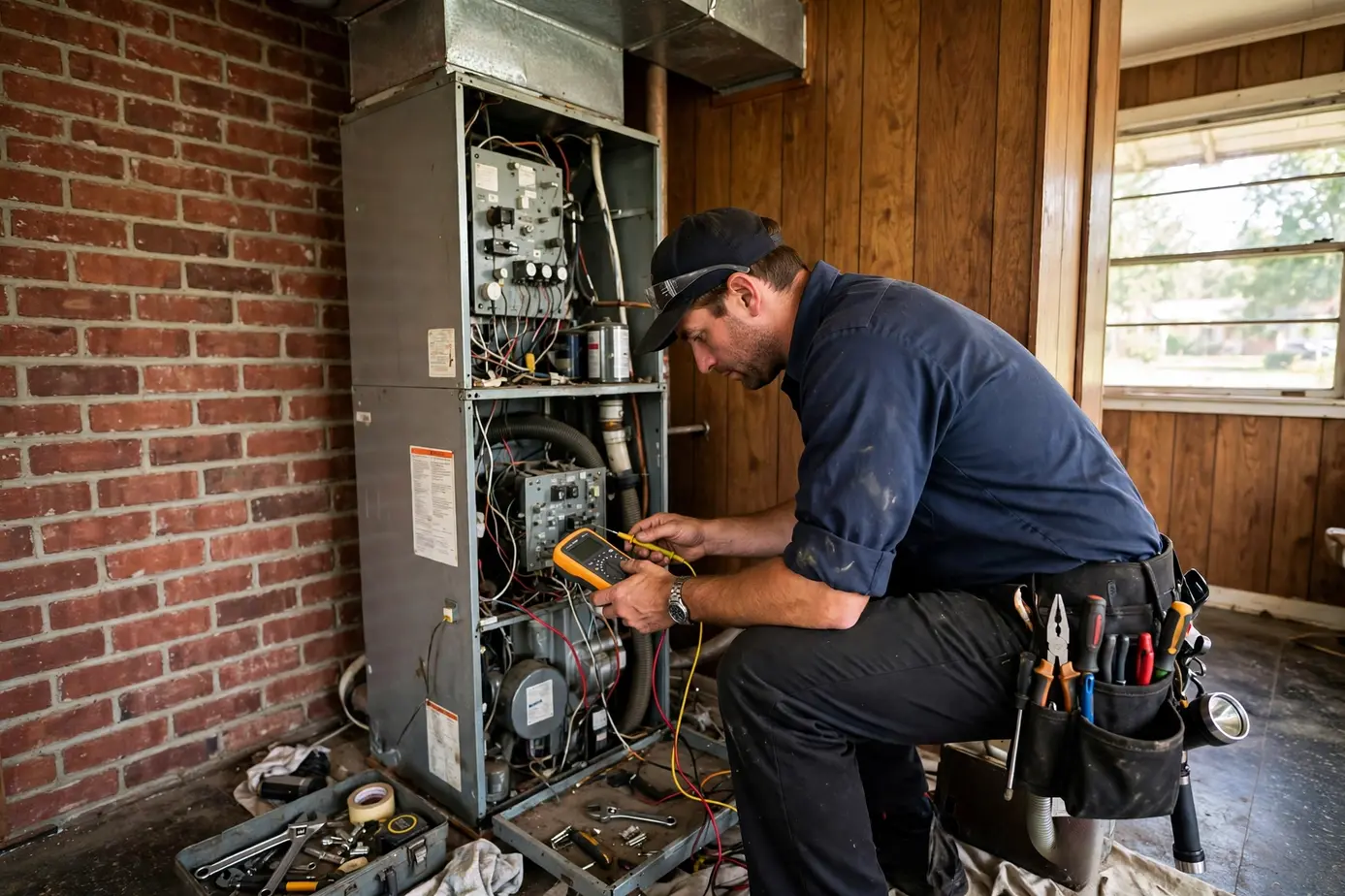
When we get a call about no heat at all when the thermostat calls for it, the first job is narrowing the suspect list, and for heating repair that list starts with system identification and fault reading. Homes in Amqui / Downtown Madison and Madison Park present the same symptom for different reasons, so the test plan follows your house, not a script.
How we fix it
System identification and fault reading
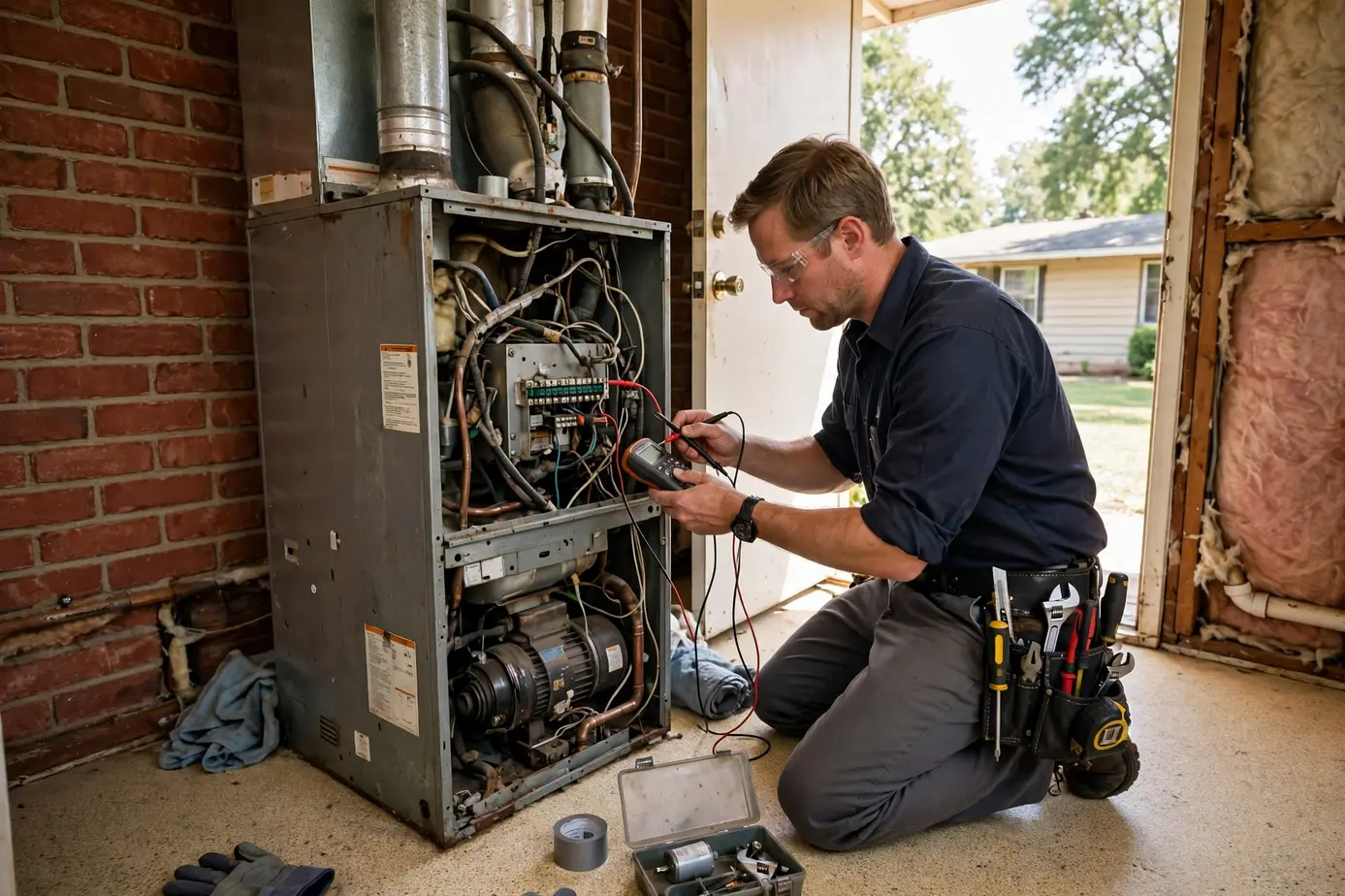
We confirm fuel type, read control board codes and check for lockouts before touching parts. That first ten minutes often separates a simple sensor cleaning from a control board replacement.
Ignition and safety checks
Flame sensors, igniters, pressure switches and rollout limits all get tested on gas equipment. Safety controls are never bypassed to get heat running, full stop.
Airflow and auxiliary heat tests
On heat pump homes we test defrost operation and auxiliary strips, because a house can feel half-heated when strips fail and the pump alone cannot carry a cold Madison night.
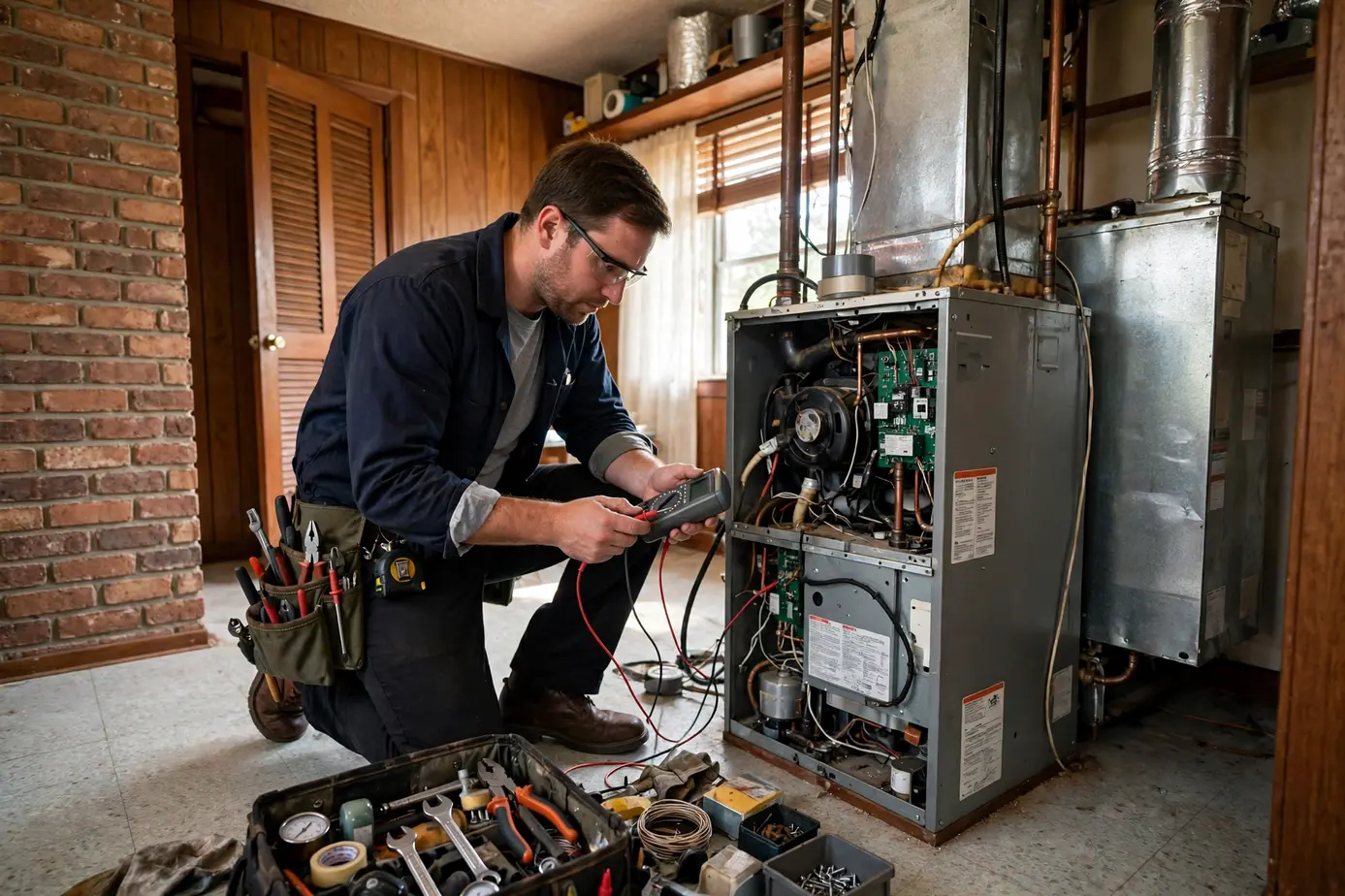
Why Madison homeowners call us for heating repair
For heating repair work the promise is specific: If the failure sits in a sensor, switch or igniter, repair is usually quick and sensible. The quote for your job is written before work begins at your Madison address, and the findings behind it, the readings from ignition and safety checks included, stay yours whether you book the repair or not.
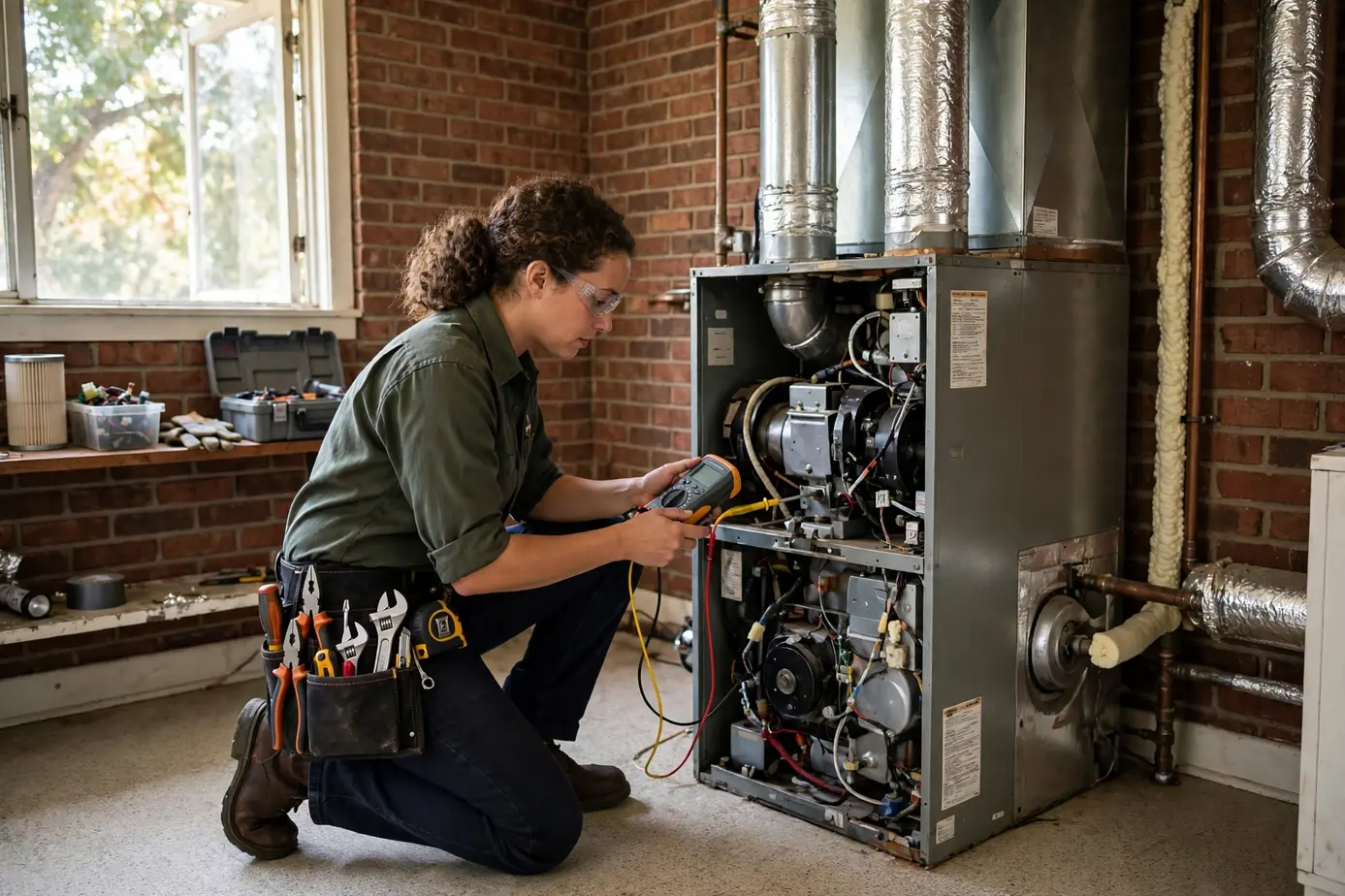
- System identification and fault reading, with readings shown to you
- Airflow and auxiliary heat tests before we call the job done
- Crew based at 102 Shakespeare Ave, Madison
- Written quote agreed before heating repair work starts
Repair, wait, or replace?
If the failure sits in a sensor, switch or igniter, repair is usually quick and sensible. If the triage points to a cracked heat exchanger, a dead compressor in heating mode, or a blower motor on a very old air handler, we will slow down and talk options with real numbers. Triage exists so you do not pay for three guesses before anyone names the actual problem.
| Situation | Likely cause | What we do |
|---|---|---|
| No heat, system silent | Thermostat, breaker, control fuse or lockout | Power and control circuit checks |
| Heat starts, then stops | Flame sensor, pressure switch or overheating | Clean or replace sensor, check venting |
| Heat pump blowing cool | Defrost fault or failed aux strips | Defrost test, strip amp draw |
| Runs nonstop, still cold | Undersized output, duct loss or weak gas pressure | Output and duct inspection |
The Madison angle
Madison winters are not Minnesota winters, but January nights near the Cumberland River dip below freezing often enough to expose weak igniters and tired heat pumps. Post-war homes in Amqui and Downtown Madison frequently have one system serving additions built decades apart, so a no-heat call here often turns into a conversation about airflow to the far rooms, not just the furnace itself.
Check the thermostat batteries, the filter and the breaker panel first, and confirm any gas valve near the furnace is on. If you smell gas, leave and call the gas utility from outside. Do not keep resetting a furnace that locks out repeatedly, because lockouts are the system protecting itself. A myth we hear each winter: closing vents in unused rooms saves money. On most Madison duct systems it raises pressure and can make overheating worse.
From the field: heating repair notes
Triage has a paper trail in our shop: every no-heat call gets its fault history written down, because intermittent faults hide from single visits. A furnace that locked out twice in December and once in February is telling a story about a pressure switch drifting at the edge of its rating, or a condensate trap that only misbehaves on windy nights. Madison callers who keep their own notes, even scribbled dates on the furnace door, hand us the second half of that story, and intermittent problems get solved in one visit instead of three.
A word about intermittent heat, the hardest class of call in this trade: faults that appear only at 5 AM, only on windy nights, or only after a long run refuse to perform for a technician at noon. Our answer is data: fault-code history, a combustion or electrical snapshot while the system behaves, and a short list of suspects ranked by how well each explains the pattern. Sometimes the honest deliverable of a first visit is a monitored plan, and Madison homeowners who understand that get their gremlin caught days sooner.
Heating Repair questions from Madison callers
What is the most common reason for a house with no heat and no clear cause?
In our Madison calls it is usually a triage visit that identifies whether the furnace, heat pump or air handler is at fault. Heating repair starts with a simple question most callers cannot answer, and should not have to: which system is actually failing? We confirm the cause with testing before quoting, because several faults share the same symptom and guessing gets expensive.
What actually happens during a heating repair visit?
The visit runs through system identification and fault reading, ignition and safety checks, airflow and auxiliary heat tests. We confirm fuel type, read control board codes and check for lockouts before touching parts. That first ten minutes often separates a simple sensor cleaning from a control board replacement. On heat pump homes we test defrost operation and auxiliary strips, because a house can feel half-heated when strips fail and the pump alone cannot carry a cold Madison night.
My system is showing this: air from the vents feels cool or barely warm. What does that point to?
That pattern is one we test early on heating repair calls. Flame sensors, igniters, pressure switches and rollout limits all get tested on gas equipment. Safety controls are never bypassed to get heat running, full stop. If the test clears that suspect, we move down the list rather than replacing parts on a hunch.
How do I decide between repairing and replacing for heating repair?
If the failure sits in a sensor, switch or igniter, repair is usually quick and sensible. If the triage points to a cracked heat exchanger, a dead compressor in heating mode, or a blower motor on a very old air handler, we will slow down and talk options with real numbers. Triage exists so you do not pay for three guesses before anyone names the actual problem.
What can I safely check myself before calling about heating repair?
Check the thermostat batteries, the filter and the breaker panel first, and confirm any gas valve near the furnace is on. If you smell gas, leave and call the gas utility from outside. Do not keep resetting a furnace that locks out repeatedly, because lockouts are the system protecting itself.
Does Madison weather make heating repair problems worse?
It shapes them. Madison winters are not Minnesota winters, but January nights near the Cumberland River dip below freezing often enough to expose weak igniters and tired heat pumps. Post-war homes in Amqui and Downtown Madison frequently have one system serving additions built decades apart, so a no-heat call here often turns into a conversation about airflow to the far rooms, not just the furnace itself.
Need heating repair in Madison?
Call now if you are seeing this: the system runs constantly yet the house loses ground overnight We will triage on the phone and give you a straight arrival window.
SCHEDULE SERVICE · (615) 436-9171Mon-Fri 7AM-7PM · Sat 8AM-4PM · Emergency calls answered around the clock.