Furnace Repair · Madison, TN 37115
Furnace Repair in Madison, TN
Most furnace breakdowns in Madison trace back to a short list: a cracked hot-surface igniter, a flame sensor filmed with oxidation, a pressure switch that cannot prove venting, or a blower motor that has given up. We test that list methodically, and we check combustion safety before we celebrate that the burners lit.
Written quote before work starts · Davidson County homes · Mon-Fri 7AM-7PM · Sat 8AM-4PM · 24/7 Emergency
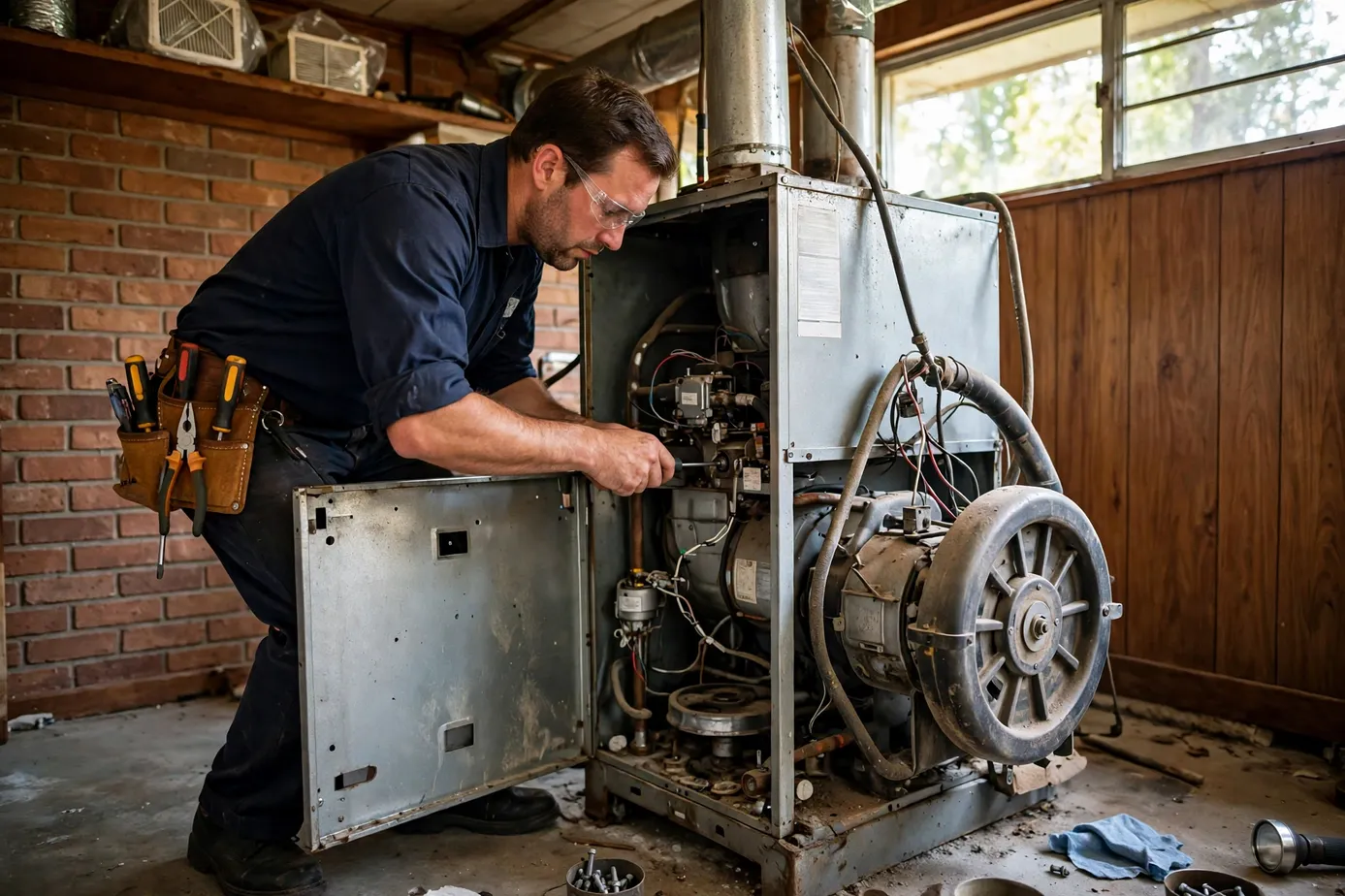
Signs you need furnace repair
- The furnace clicks or glows, then shuts down without firing
- Burners light for a few seconds and drop out again and again
- The blower runs but pushes cool air through the vents
- Rumbling, booming or a delayed ignition pop at startup
- A sulfur or rotten-egg smell anywhere near the equipment
- The furnace overheats and trips off on its limit switch
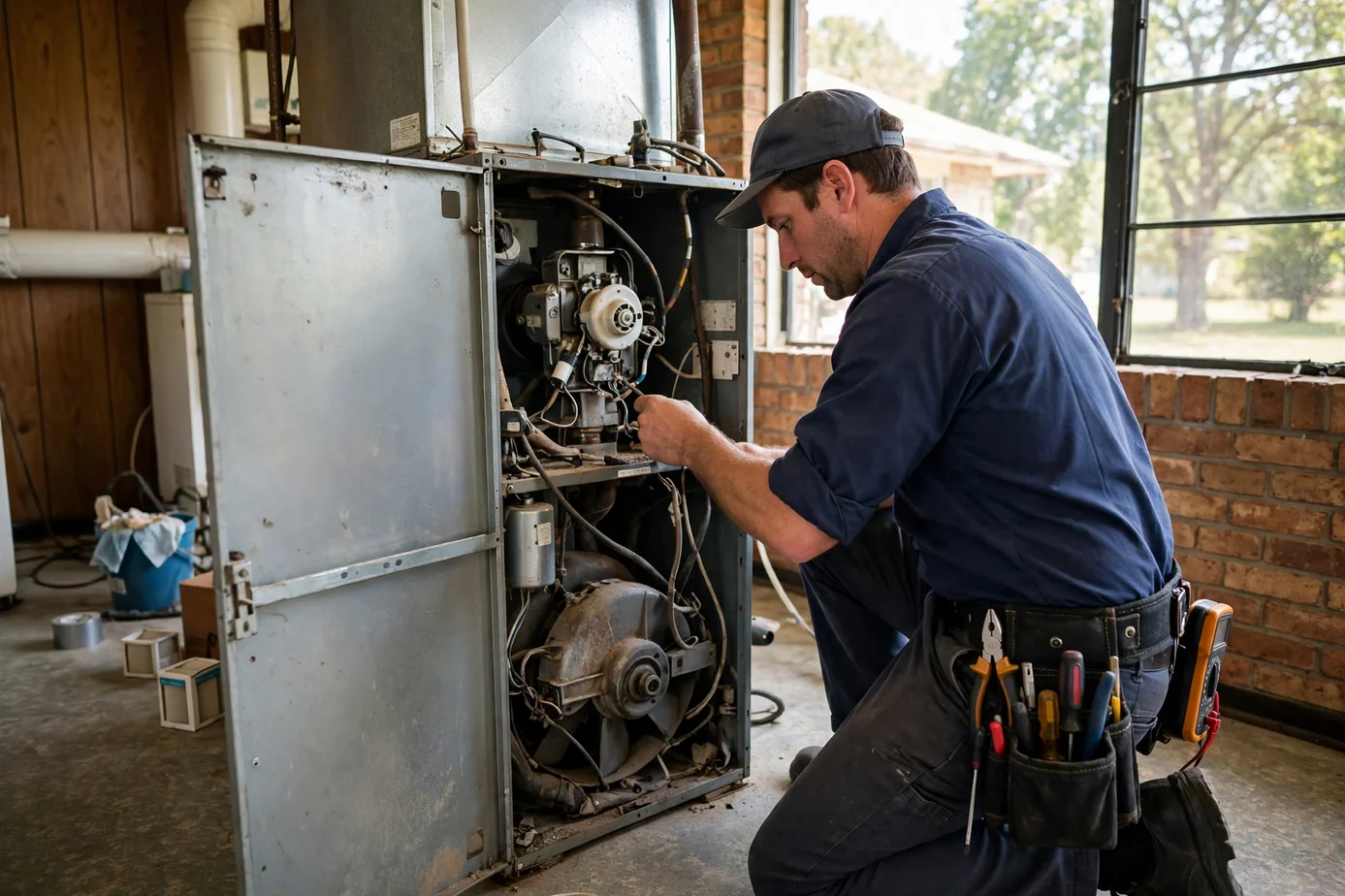
When we get a call about the furnace clicks or glows, then shuts down without firing, the first job is narrowing the suspect list, and for furnace repair that list starts with ignition train testing. Homes in Shepherd Hills and Amqui / Downtown Madison present the same symptom for different reasons, so the test plan follows your house, not a script.
How we fix it
Ignition train testing
Igniter resistance, flame sensor microamp signal and gas valve operation get measured, not guessed. A sensor cleaning is a legitimate fix when the signal recovers, and we will say so.
Venting and pressure proof
Inducer motor output and pressure switch closure tell us the flue path is clear. Bird nests and collapsed vent liners are real finds in older Madison chimneys and sidewall vents.
Blower and heat checks
We test motor capacitors, belts on older units and temperature rise across the heat exchanger. A cracked exchanger ends the repair conversation and starts a safety one, immediately.
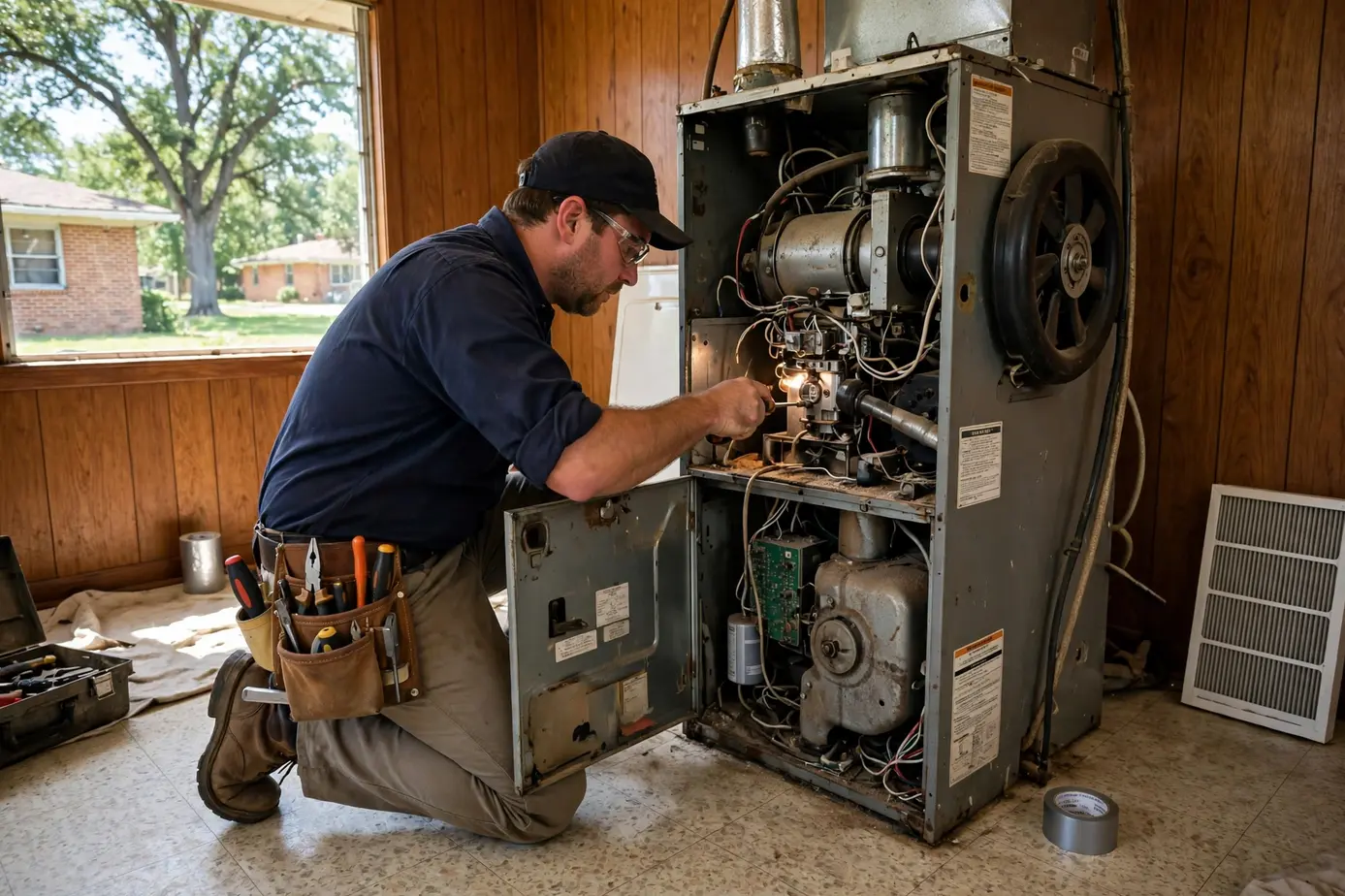
Why Madison homeowners call us for furnace repair
For furnace repair work the promise is specific: Sensors, igniters and switches are wear items, and replacing them on a sound furnace is money well spent. The quote for your job is written before work begins at your Madison address, and the findings behind it, the readings from venting and pressure proof included, stay yours whether you book the repair or not.
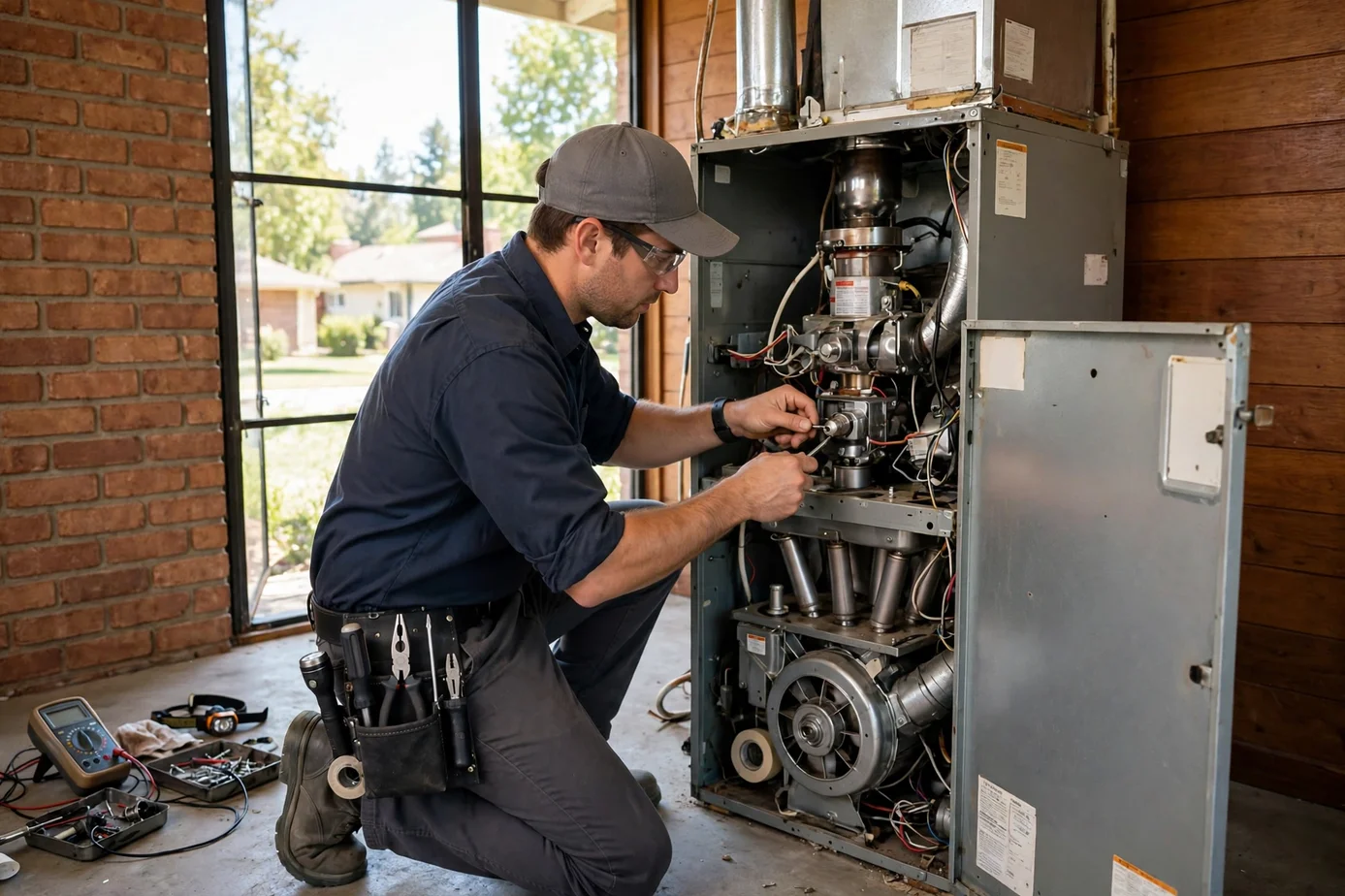
- Ignition train testing, with readings shown to you
- Blower and heat checks before we call the job done
- Crew based at 102 Shakespeare Ave, Madison
- Written quote agreed before furnace repair work starts
Repair, wait, or replace?
Sensors, igniters and switches are wear items, and replacing them on a sound furnace is money well spent. A failed heat exchanger, a rusted burner assembly, or repeated limit trips from a deteriorating system point the other way. When we get a call about a furnace that eats an igniter every winter, we look for the root cause, often high gas pressure or a restricted flue, instead of selling a third igniter.
| Situation | Likely cause | What we do |
|---|---|---|
| Lights then dies in seconds | Flame sensor signal too weak | Clean or replace sensor, verify microamps |
| Glow but no flame | Igniter cracked or gas valve fault | Resistance test, valve voltage check |
| No inducer sound | Inducer motor or control board | Power trace from board to motor |
| Hot then cold cycling | Limit trips from low airflow | Filter, blower and duct pressure checks |
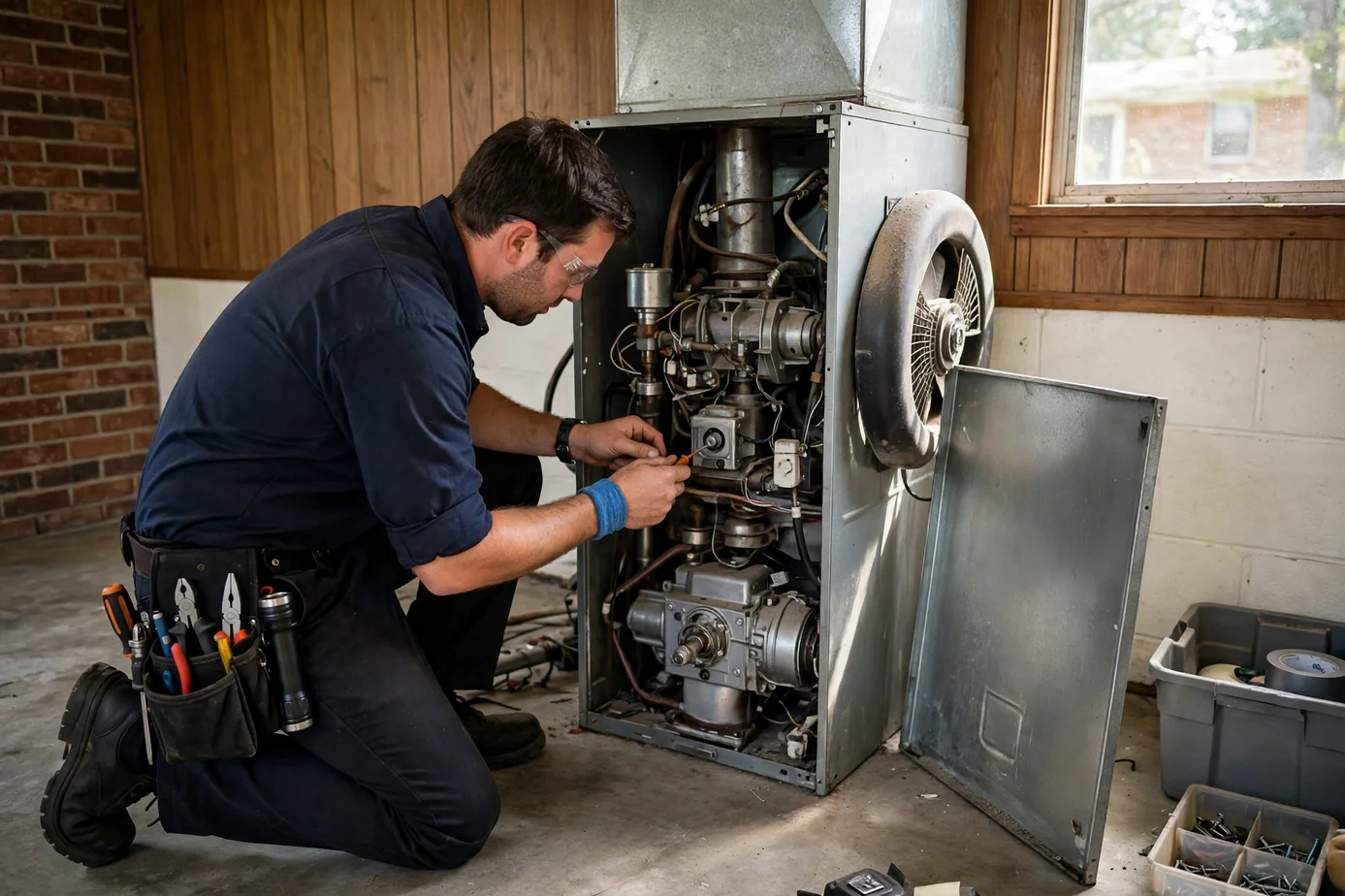
The Madison angle
Gas furnaces are common in Madison's mid-century brick ranch stock, many of them vented through masonry chimneys that were built for older, hotter equipment. Condensing furnaces add their own local quirk: condensate drains that freeze or clog in Shepherd Hills crawl spaces. Winter cold snaps here are short but sharp, so a furnace that limps through a mild week can fail outright on the first 20-degree night.
A homeowner can change the filter, confirm the thermostat is on heat, and look for a blinking code through the furnace sight glass to tell us what it says. Opening the burner compartment, jumping safety switches or lighting anything by hand is off the table. Myth check: a furnace that smells dusty at first startup of the season is usually burning off summer dust, but a sulfur smell is never normal and always deserves a call.
From the field: furnace repair notes
Flame rectification sounds like jargon until you watch it fail: the sensor sits in the burner flame and passes a tiny DC signal, measured in microamps, that proves fire to the control board. Oxidation builds an insulating skin on that rod through a Madison heating season, the signal sags below threshold, and the board does the safe thing and shuts the gas off. Polishing the rod restores the signal when the rod itself is sound, which is why we measure before and after instead of replacing a part that a two-minute service revives.
Inducer motors tell on themselves if you listen at the right moment: a healthy inducer spools up smoothly and the pressure switch clicks once. A chattering switch, or an inducer that groans before it spins, points to bearings, a cracked vacuum hose or a flue that is slowly restricting. Madison chimneys shared with water heaters complicate that picture, since both appliances breathe through connected paths in older homes. We test the whole venting arrangement, not just the part with the furnace badge on it.
Where we do this work
Furnace Repair questions from Madison callers
What is the most common reason for a furnace that lights and then quits?
In our Madison calls it is usually a dirty flame sensor or a failing hot-surface igniter. Most furnace breakdowns in Madison trace back to a short list: a cracked hot-surface igniter, a flame sensor filmed with oxidation, a pressure switch that cannot prove venting, or a blower motor that has given up. We confirm the cause with testing before quoting, because several faults share the same symptom and guessing gets expensive.
What actually happens during a furnace repair visit?
The visit runs through ignition train testing, venting and pressure proof, blower and heat checks. Igniter resistance, flame sensor microamp signal and gas valve operation get measured, not guessed. A sensor cleaning is a legitimate fix when the signal recovers, and we will say so. We test motor capacitors, belts on older units and temperature rise across the heat exchanger.
My system is showing this: burners light for a few seconds and drop out again and again. What does that point to?
That pattern is one we test early on furnace repair calls. Inducer motor output and pressure switch closure tell us the flue path is clear. Bird nests and collapsed vent liners are real finds in older Madison chimneys and sidewall vents. If the test clears that suspect, we move down the list rather than replacing parts on a hunch.
How do I decide between repairing and replacing for furnace repair?
Sensors, igniters and switches are wear items, and replacing them on a sound furnace is money well spent. A failed heat exchanger, a rusted burner assembly, or repeated limit trips from a deteriorating system point the other way. When we get a call about a furnace that eats an igniter every winter, we look for the root cause, often high gas pressure or a restricted flue, instead of selling a third igniter.
What can I safely check myself before calling about furnace repair?
A homeowner can change the filter, confirm the thermostat is on heat, and look for a blinking code through the furnace sight glass to tell us what it says. Opening the burner compartment, jumping safety switches or lighting anything by hand is off the table. Myth check: a furnace that smells dusty at first startup of the season is usually burning off summer dust, but a sulfur smell is never normal and always deserves a call.
Does Madison weather make furnace repair problems worse?
It shapes them. Gas furnaces are common in Madison's mid-century brick ranch stock, many of them vented through masonry chimneys that were built for older, hotter equipment. Condensing furnaces add their own local quirk: condensate drains that freeze or clog in Shepherd Hills crawl spaces. Winter cold snaps here are short but sharp, so a furnace that limps through a mild week can fail outright on the first 20-degree night.
Need furnace repair in Madison?
Call now if you are seeing this: the blower runs but pushes cool air through the vents We will triage on the phone and give you a straight arrival window.
SCHEDULE SERVICE · (615) 436-9171Business hours 7AM-7PM weekdays, 8AM-4PM Saturdays; emergencies never wait for morning.